Which NIMS Structure Makes Cooperative Multi-Agency Decisions?
When several agencies are involved in an emergency, making decisions can quickly become complicated. Fire departments, law enforcement agencies, emergency medical services, public health organizations, emergency managers, and other stakeholders may all have different responsibilities and priorities. A system is therefore needed to bring these organizations together and support coordinated decision-making.
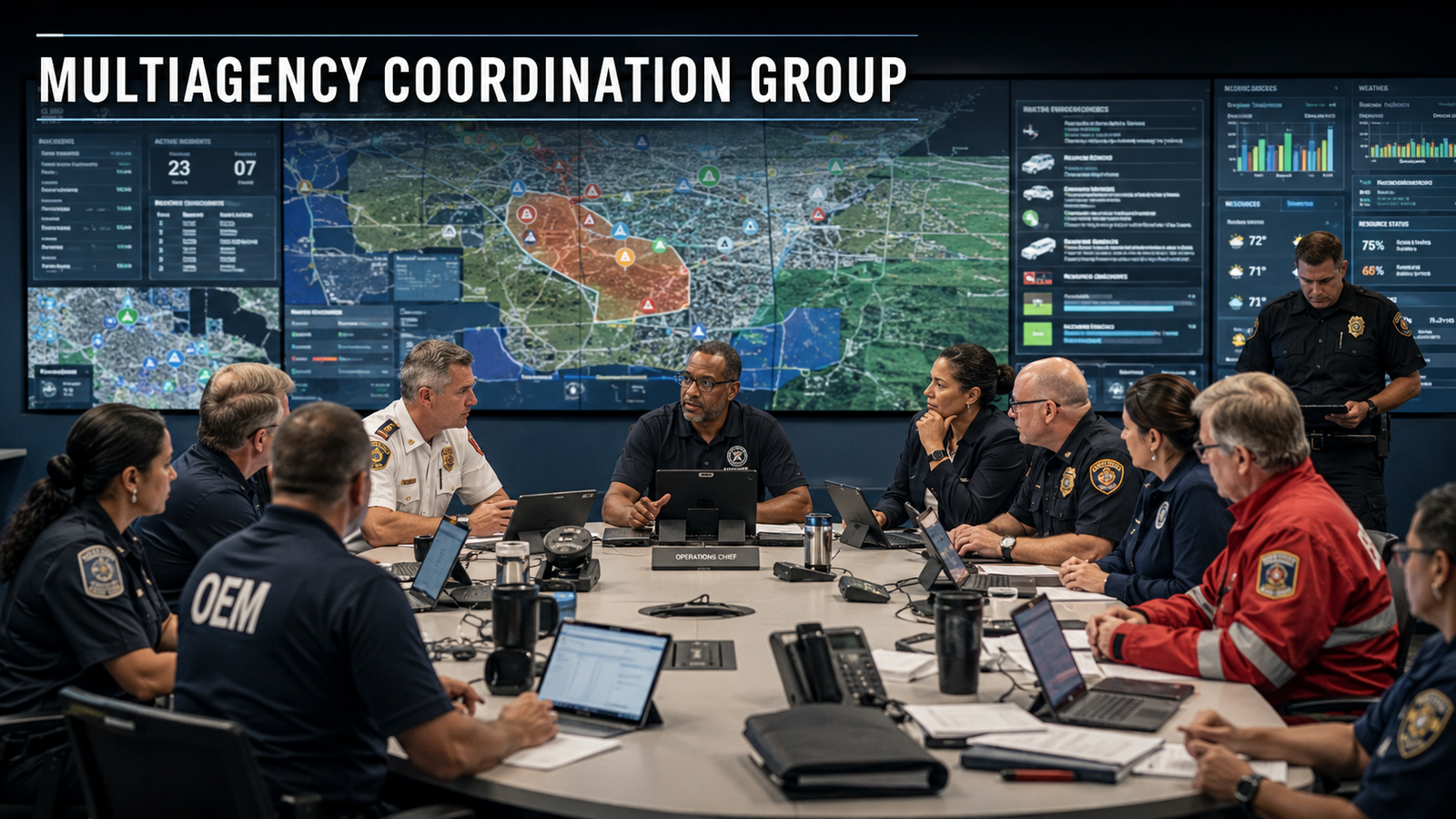
If you are studying the National Incident Management System (NIMS), you may come across the question, which NIMS structure makes cooperative multi-agency decisions? The correct answer is the Multiagency Coordination Group (MAC Group). FEMA describes MAC Groups as part of the off-site incident management structure of NIMS and explains that they are established and organized to make cooperative multiagency decisions.
Understanding the answer is more useful than simply memorizing it. Once you know what a MAC Group does, who participates in it, and how it differs from structures such as the Incident Command System (ICS), Emergency Operations Centers (EOCs), and the Joint Information System (JIS), the question becomes much easier to remember.
What Is the Correct Answer?
The answer to which NIMS structure makes cooperative multi-agency decisions? is the Multiagency Coordination Group, commonly called the MAC Group. MAC Groups bring representatives from stakeholder agencies and organizations together so they can make decisions that affect multiple agencies, jurisdictions, or areas of responsibility.
According to FEMA’s NIMS documentation, MAC Groups are policy-level bodies that support resource prioritization and allocation. They also help enable decision-making between elected or appointed officials and the people responsible for managing an incident, such as an Incident Commander. This makes the MAC Group especially important when an emergency requires decisions that go beyond the authority or responsibilities of a single organization.
A simple way to remember the answer is to associate the word cooperative with coordination. When the question asks which NIMS structure makes cooperative multi-agency decisions, think of the Multiagency Coordination Group. Its purpose is not to take over field operations but to provide a forum where senior representatives can work together on broader priorities and resource decisions.
What Is a Multiagency Coordination Group?
A Multiagency Coordination Group is generally made up of agency administrators, executives, or their designated representatives. The members represent organizations that have a stake in the incident or resources that may be needed during the response. Depending on the situation, a MAC Group can include representatives from different levels of government and different disciplines.
MAC Groups are considered part of the off-site incident management structure of NIMS. Their role is particularly valuable when an incident affects multiple organizations or when available resources are limited. Instead of having every organization make completely separate high-level decisions, representatives can work together and establish shared priorities.
The group is sometimes described as a policy group because its work focuses on strategic-level decisions rather than tactical field operations. FEMA notes that MAC Groups can be established at different organizational levels and across different disciplines, including emergency management, public health, critical infrastructure, and the private sector.
How Does the MAC Group Make Cooperative Decisions?
The MAC Group makes cooperative decisions by bringing representatives from different stakeholder organizations into the same decision-making environment. Each representative can provide information about the needs, capabilities, limitations, and resources of their organization. This creates a broader picture of the incident and helps leaders make informed decisions.
One important area is resource prioritization. During a large emergency, multiple communities or agencies may need the same limited resources. Equipment, personnel, transportation, specialized teams, or other support may not be available everywhere at the same time. A MAC Group can help establish priorities so scarce resources are directed where they are most needed.
The process also helps connect strategic decision-makers with incident management personnel. A MAC Group does not simply issue tactical instructions to people working at the scene. Instead, it supports high-level decisions and provides guidance that can help incident managers and other coordination structures work more effectively.
What Is the Difference Between MAC Groups and ICS?
The Incident Command System, or ICS, is one of the most important structures within NIMS, but it is not the answer to which NIMS structure makes cooperative multi-agency decisions? ICS provides a standardized approach for managing incidents and organizing personnel, responsibilities, communications, and operational activities.
ICS is generally focused on incident management and the coordination of operations. Depending on the incident, an Incident Commander or Unified Command may direct the response at the incident level. The people working through ICS are concerned with accomplishing incident objectives and managing the operational response.
The MAC Group has a different role. It operates at a higher policy and strategic level and does not perform the incident command function. FEMA specifically explains that MAC Groups do not replace primary operations, coordination, or dispatch organizations and do not perform direct incident-command tasks.
MAC Group vs. EOC and JIS
An Emergency Operations Center, commonly called an EOC, supports incident management by providing coordination, information, resources, and other assistance. EOC personnel can help organizations understand the situation, coordinate resource needs, and support the response. However, an EOC is not the same thing as a MAC Group.
The Joint Information System, or JIS, has another important purpose. It helps coordinate public information so that agencies can provide consistent, accurate, timely, and understandable information to the public and other stakeholders. In other words, the JIS is primarily concerned with information and public communication rather than making cooperative multi-agency policy decisions.
The MAC Group stands apart because its specific purpose includes cooperative multiagency decision-making at the policy level. FEMA training materials explain that MAC Groups can support strategic policy guidance and the prioritization and allocation of scarce resources. Remembering these different roles can make NIMS examination questions much easier to answer.
Why Are MAC Groups Important During Emergencies?
Large emergencies rarely stay within the boundaries of one agency. A major wildfire, hurricane, flood, public health emergency, or infrastructure incident can affect multiple jurisdictions and require resources from several organizations. Without a mechanism for high-level coordination, agencies could make decisions independently that conflict with one another or compete for the same resources.
MAC Groups help reduce this problem by creating a place where stakeholder representatives can look at the incident from a broader perspective. Instead of focusing only on the needs of one agency, participants can consider the overall situation and determine how limited resources should be prioritized.
This is particularly useful when competition for resources becomes significant. FEMA’s senior-official training explains that MAC Groups may relieve coordination and dispatch organizations of certain prioritization and allocation responsibilities when resource competition is substantial. That strategic role is one of the main reasons MAC Groups are important within NIMS.
Who Can Participate in a MAC Group?
MAC Group membership usually involves senior representatives from agencies or organizations affected by an incident or involved in its response. These may include agency administrators, executives, or people specifically designated to represent them. The exact membership can vary depending on the jurisdiction and the nature of the emergency.
The structure is flexible because emergencies are different. A public health emergency may require participation from health organizations and other essential service providers, while a major wildfire could require representatives from fire agencies, emergency management organizations, transportation agencies, utilities, and other stakeholders.
MAC Groups can also exist at different organizational levels. FEMA explains that organizations at local, state, tribal, or federal levels, as well as organizations from different disciplines, may establish a MAC Group. This flexibility allows the structure to be adapted to the needs of a particular incident.
A Simple Example of a MAC Group in Action
Imagine a large wildfire spreading across several communities. Fire departments are responding to the immediate threat, law enforcement is managing evacuations, emergency managers are coordinating support, and public officials are concerned about the safety of residents. At the same time, multiple areas need additional firefighters, vehicles, shelter resources, and other support.
In this situation, different agencies may have competing resource requirements. One community might need additional evacuation support while another needs more firefighting resources. A MAC Group can bring appropriate senior representatives together to consider the broader situation and establish priorities.
The MAC Group would not replace the Incident Commander or take over tactical firefighting operations. Instead, it could help with policy-level decisions and resource prioritization while supporting the people responsible for managing the incident. This distinction is important because it explains exactly why the MAC Group is the answer to the question.
How to Remember the Correct NIMS Answer
For exam preparation, the easiest way to remember which NIMS structure makes cooperative multi-agency decisions? is to focus on the wording of the question. The phrase “cooperative multi-agency decisions” points directly toward the Multiagency Coordination Group.
You can also remember the four structures by thinking about their primary roles. ICS manages incident operations, EOCs provide coordination and support, JIS coordinates public information, and MAC Groups support policy-level cooperative decisions. The structures work together, but they do not all perform the same function.
This distinction is more valuable than memorizing isolated definitions. If you understand why a MAC Group exists, you are more likely to identify the correct answer even if an exam question uses slightly different wording. FEMA’s training material directly identifies MAC Groups as structures established and organized to make cooperative multiagency decisions.
Final Answer: Which NIMS Structure Makes Cooperative Multi-Agency Decisions?
So, which NIMS structure makes cooperative multi-agency decisions? The answer is the Multiagency Coordination Group (MAC Group).
MAC Groups bring representatives from stakeholder agencies and organizations together to support policy-level decision-making, resource prioritization, and strategic coordination. They are part of the off-site incident management structure of NIMS and can help connect senior officials with those managing incidents.
The most important point to remember is that a MAC Group does not replace ICS, an EOC, or other operational organizations. Its role is different: it provides a mechanism for cooperative multiagency decisions, particularly when incidents require high-level coordination and competing resources must be prioritized.
You May Also Read: Globaljourna