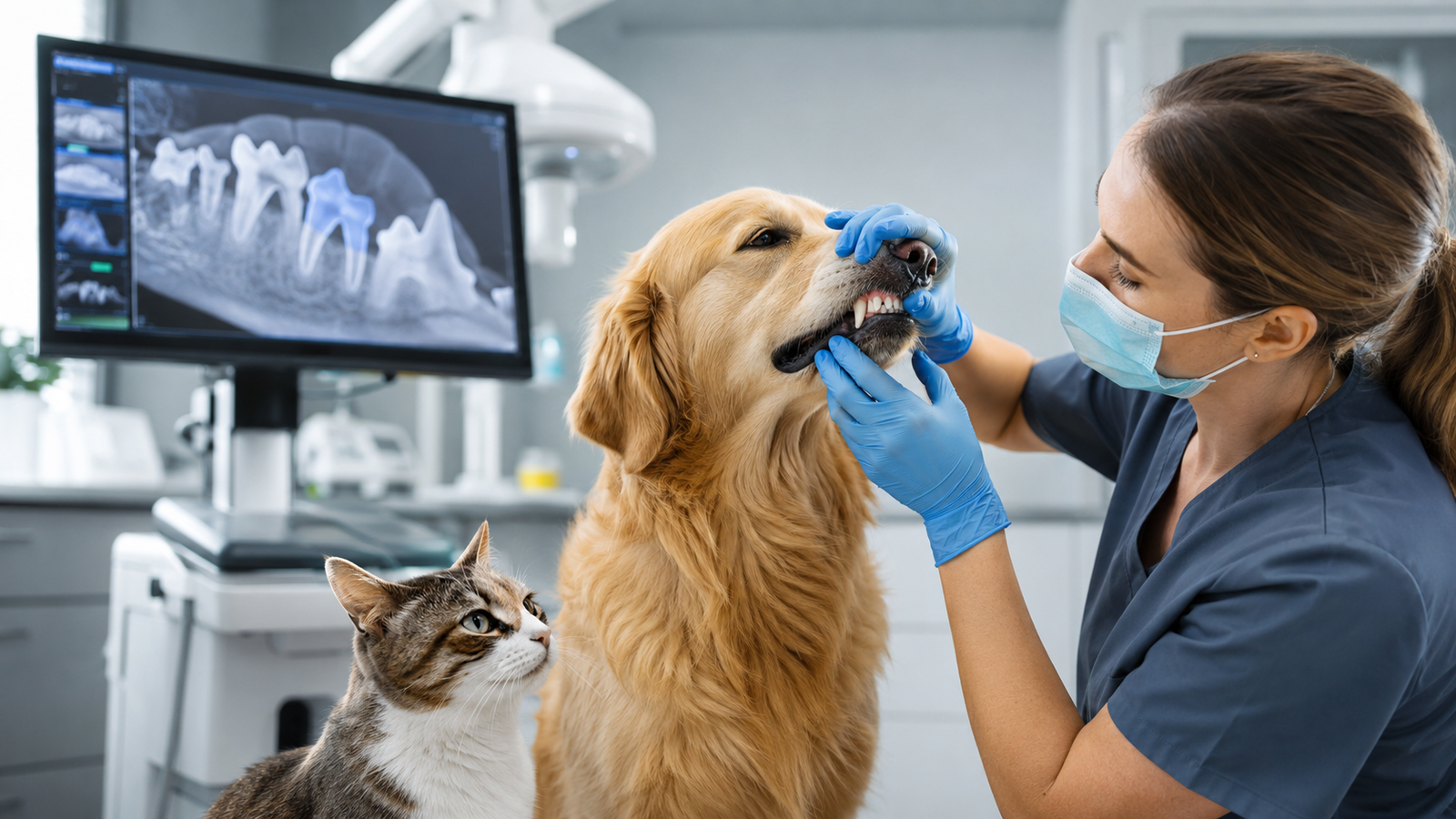
Nerovet AI Smart Dentistry: How AI Is Changing Pet Dental Care
Nerovet AI Smart Dentistry is becoming an interesting topic for pet owners, veterinary professionals, and technology enthusiasts who want to understand how artificial intelligence can support better dental care for animals. Dental problems are common in pets, but they are not always easy to notice at home. A dog or cat may continue eating and behaving normally even when an oral health problem is developing.
The idea behind Nerovet AI Smart Dentistry is to use artificial intelligence to examine dental images and provide useful information about possible oral health concerns. Nerovet currently presents itself as an AI-powered pet dental health platform designed for dogs, cats, and veterinary clinics. Its website describes applications including the analysis of dental images and X-rays to help identify potential problems.
What makes this approach interesting is the combination of technology and veterinary expertise. Instead of treating AI as a replacement for a veterinarian, the technology can be viewed as an additional layer of information. That distinction matters because an AI-generated result should not be treated as a final medical diagnosis. Veterinary examination and professional judgment remain essential when a pet has signs of dental disease.
What Is Nerovet AI Smart Dentistry?
Nerovet AI Smart Dentistry refers to the use of artificial intelligence to support the assessment of dental health in pets. According to Nerovet’s current website, its platform focuses on AI-powered pet dental health detection and can be used for animals such as dogs and cats. The technology is designed to analyze dental images and highlight possible oral health concerns.
The concept is relatively simple from a user’s perspective. Dental images can be submitted to an AI system, which processes visual information and looks for patterns associated with potential dental problems. Machine-learning systems can be trained to recognize particular features in images, allowing them to flag areas that may deserve closer attention from a veterinary professional.
This does not mean that a photograph or AI report can replace a complete veterinary examination. Some dental conditions cannot be properly evaluated from a simple photograph, and some problems require dental X-rays or other clinical procedures. Independent commentary about Nerovet also emphasizes this limitation and notes that the platform’s results should be regarded as reference information rather than a medical diagnosis.
Why AI Is Becoming Important in Pet Dentistry
Pet dental disease can develop gradually, which makes early recognition especially valuable. Owners may notice bad breath, visible tartar, red gums, difficulty chewing, or changes in eating habits, but some problems can remain hidden. AI-assisted imaging has the potential to help identify suspicious patterns earlier and encourage owners or professionals to investigate them.
Another advantage of artificial intelligence is speed. A computer system can process visual information quickly and consistently once an image has been uploaded. Nerovet’s website describes AI analysis as a way to identify potential conditions such as periodontal disease, tooth resorption, fractures, and other oral abnormalities.
However, speed should never be confused with certainty. A fast AI result is useful only when it is interpreted correctly. Veterinary professionals can combine imaging findings with an animal’s age, symptoms, medical history, physical examination, and other diagnostic information. In that sense, AI works best as a supporting tool rather than an independent decision-maker.
How Nerovet AI Smart Dentistry Works
The basic process begins with dental imagery. Depending on the particular workflow, this may involve photographs or dental X-rays. The AI system examines the available visual information and searches for patterns that may correspond with dental abnormalities. This is similar to other computer-vision applications where algorithms are trained to distinguish between different visual features.
Once the system has processed the image, it can provide findings or indicators that draw attention to areas worth reviewing. Nerovet describes applications involving periodontal disease detection, tooth resorption identification, root abscess or fracture detection, and visual reporting for communication with pet owners.
The final step should involve human review. A veterinarian can consider the AI findings alongside the animal’s overall condition and decide whether further examination or treatment is appropriate. This human-in-the-loop approach is particularly important in veterinary healthcare because images can be affected by positioning, lighting, image quality, anatomy, and other factors.
Key Benefits of Nerovet AI Smart Dentistry
One potential benefit is improved awareness. Pet owners do not always know what they are looking at when examining an animal’s mouth. An AI-supported system can help draw attention to areas that may deserve professional evaluation, making dental health easier to discuss during a veterinary visit.
Another potential benefit is efficiency for veterinary teams. Dental imaging can contain a lot of information, and an AI system may help organize or highlight findings for professional review. Nerovet promotes its technology as a way to support faster analysis and more informed dental care decisions.
Communication is another important area. Dental problems can be difficult to explain to pet owners without clear visual evidence. AI-generated visual reports or highlighted areas may help veterinarians explain why a particular dental issue deserves attention. Better communication can make it easier for owners to understand preventive care, follow-up examinations, and recommended treatment.
What Dental Problems Can AI Help Identify?
One of the major applications described by Nerovet is the identification of periodontal disease. Periodontal problems affect the tissues around the teeth and can become increasingly serious when left untreated. AI-based image analysis may help identify visual or radiographic patterns that suggest the presence of dental disease.
Tooth resorption is another area of interest, particularly in cats. This condition can be painful and may not always be obvious to owners during a routine look inside the mouth. Nerovet specifically lists tooth-resorption identification among the applications of its AI dental scanning technology.
The platform also describes potential detection of fractures and root-related abnormalities. These findings can be particularly important because some problems may require more detailed veterinary investigation. An AI system can highlight a suspicious area, but a veterinarian must determine what the finding means clinically and what action, if any, should follow.
Can Nerovet AI Replace a Veterinarian?
No. This is probably the most important point for anyone researching Nerovet AI Smart Dentistry. Artificial intelligence can analyze images and identify patterns, but it does not replace the professional knowledge required to diagnose and treat an animal. Nerovet itself describes its technology as a support tool rather than a substitute for veterinary care.
A veterinarian considers much more than an image. They can evaluate symptoms, behavior, pain, medical history, physical findings, and diagnostic results together. They can also decide whether sedation, dental cleaning, X-rays, extraction, medication, or another procedure is necessary.
This distinction also protects pet owners from relying too heavily on an automated result. Independent information about Nerovet highlights that its detection results are intended for reference and should not be treated as a medical diagnosis. Therefore, an AI result should be a reason to ask better questions, not a reason to avoid professional veterinary care.
Limitations and Things Users Should Know
The quality of the input image can influence the usefulness of an AI analysis. A poorly positioned photograph, low-resolution image, obstructed tooth, or inadequate lighting may make it harder for an algorithm to identify relevant features. This is a common challenge for image-based AI systems and is one reason professional imaging remains important.
Another limitation is that not every dental condition can be fully evaluated from a visible photograph. Problems beneath the gum line, changes around tooth roots, and other internal abnormalities may require dental radiography or a more complete clinical examination. AI can assist with available information, but it cannot magically create information that an image does not contain.
Users should also look at claims about accuracy carefully. Nerovet’s website currently promotes high AI diagnostic performance, while independent sources note the importance of understanding the evidence behind such claims. When evaluating any healthcare-related AI platform, users should consider published evidence, professional validation, regulatory information where applicable, privacy practices, and the role of human oversight.
The Future of AI-Powered Pet Dental Care
The broader direction of AI in veterinary medicine is promising. As imaging datasets become larger and machine-learning systems improve, AI may become increasingly useful for screening, image interpretation, documentation, and communication. Pet dentistry is an especially interesting area because many dental conditions can be evaluated through visual and radiographic information.
Nerovet represents one example of this emerging approach. Its focus on pet dental health demonstrates how AI does not necessarily have to target the largest healthcare market to be useful. Dogs and cats can also benefit from technologies designed to make oral health monitoring more accessible and efficient.
The most realistic future is likely to involve collaboration between AI and veterinary professionals. AI can process images quickly and identify patterns, while veterinarians provide context, clinical reasoning, and treatment decisions. This combination can potentially make pet dental care more informed without removing the human expertise that remains essential.
Is Nerovet AI Smart Dentistry Worth Paying Attention To?
Nerovet AI Smart Dentistry is worth watching because it represents a practical application of artificial intelligence in an area that is sometimes overlooked: animal dental health. Its current positioning focuses on dogs, cats, pet owners, and veterinary clinics rather than presenting itself simply as another general-purpose AI system.
For pet owners, the biggest value may be awareness. If an AI tool helps someone notice that a pet’s dental health deserves professional attention, that can be useful. For veterinary professionals, the potential value lies in using AI as an additional imaging and communication aid while retaining control over diagnosis and treatment.
At the same time, responsible use matters. People should not assume that an AI report is automatically accurate or medically conclusive. The best approach is to treat Nerovet AI Smart Dentistry as a technology-assisted screening and information tool and involve a qualified veterinarian whenever a pet has symptoms or a suspected dental problem.
Final Thoughts on Nerovet AI Smart Dentistry
Nerovet AI Smart Dentistry shows how artificial intelligence is moving beyond traditional software applications and into specialized areas of animal healthcare. By analyzing dental images and identifying patterns that may indicate oral health problems, AI can potentially make dental monitoring faster and more accessible.
The technology is most useful when it supports veterinary expertise rather than attempts to replace it. A smart system can highlight possibilities, organize information, and improve communication, while a veterinarian remains responsible for understanding the animal’s complete clinical situation.
As AI technology develops, tools like Nerovet may become increasingly sophisticated. For now, the sensible approach is to appreciate the potential while maintaining realistic expectations. AI can be a valuable assistant in pet dental care, but professional veterinary assessment remains the foundation of safe diagnosis and treatment.
You May Also Read: Globaljourna